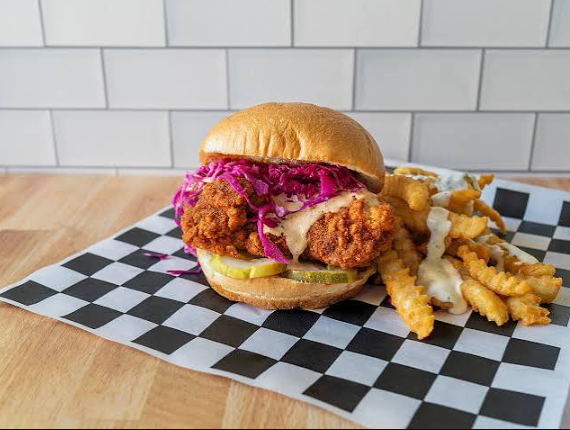
Why Does Every Salt Lake City Food Recommendation List Look the Same?
The Tourist Map Problem in Downtown Dining
Picture a visitor standing outside the Salt Palace Convention Center with forty minutes until their next meeting, scrolling through a search results page that promises the city’s ten best restaurants. Every link leads to the same handful of names clustered around Temple Square and the same stock photos of fry sauce. This happens because most city dining guides get built from press releases and sponsored placements rather than from people who actually eat there on a Tuesday night. The restaurants that pay for visibility tend to crowd out the ones locals actually drive across town for.
A common misconception is that proximity to tourist infrastructure equals quality, when in Salt Lake City the opposite is often true. Some of the most talked-about kitchens sit in strip malls near Sugar House or tucked into industrial blocks off 300 West, far from where a conference attendee would wander on foot. Another mistaken assumption is that Utah’s dining scene is thin because of its reputation for conservative liquor laws. In reality, the city has built a dense, varied food culture around Mexican, Vietnamese, Greek, and Native-inspired cooking that rarely makes it into generic travel round-ups.
Reading the City Through What Regulars Actually Order
The restaurants that earn repeat visits from Salt Lake City residents tend to share a few traits that have nothing to do with how polished their marketing looks. They’re usually run by people who’ve been cooking the same recipes for a decade or more, and they adjust menus based on what’s fresh rather than what photographs well. A regular doesn’t return to a spot because it trended online; they return because the carnitas tasted the same way it did eighteen months ago, and that kind of reliability is harder to fake than a five-star rating.
This is where a resource like the one compiling Salt Lake City restaurants locals love becomes genuinely useful, because it filters out the noise by asking people who actually live there what they order on a normal Thursday rather than what looks good for a feature photo. That kind of list tends to surface long-running mole kitchens, taco trucks with cult followings, and diners that have fed the same families for three generations. It’s a different exercise than ranking by online buzz, and the difference shows up in what makes the cut.
Local food journalism fills a similar gap, tracking openings, closings, and shifts in the scene with more granularity than a one-time list can offer. Eater SLC food coverage has spent years documenting which neighborhood spots are quietly building loyal followings long before they show up on anyone’s radar outside Utah. Reading that kind of ongoing coverage alongside a curated list gives a fuller picture than either source alone, especially for someone tracking how the city’s food identity has shifted over the past five years.
See also: How Beauty, Health, and Family Are Connected for a Happier Life
Turning a Short Trip Into an Accurate Food Itinerary
Someone with a single evening in Salt Lake City doesn’t need twenty options; they need three or four that reflect what the city actually tastes like. The practical move is to pick one restaurant from each culinary tradition the city is known for rather than clustering three similar options in the same neighborhood. A plate of Hawaiian-Korean fusion, a bowl of pho from a family-run spot, and a late-night taco run tell a more honest story than three variations on New American small plates.
Travelers planning around a conference or a short layover should also account for geography more carefully than most lists encourage. Sugar House, the Granary District, and the area around 900 South each have their own distinct food character, and trying to hit all three in one night usually means rushing through meals that deserve more attention. Spacing visits out, even across a two or three day trip, tends to produce a far better sense of what the city’s food scene is actually doing.
The larger lesson applies beyond Salt Lake City. Any traveler chasing an authentic sense of a place’s food culture should weight local, ongoing coverage and resident-driven recommendations over generic rankings built for search traffic. Cities change their restaurant scenes faster than annual guides can keep up with, and the gap between what’s trending online and what’s actually good on a given week can be significant.