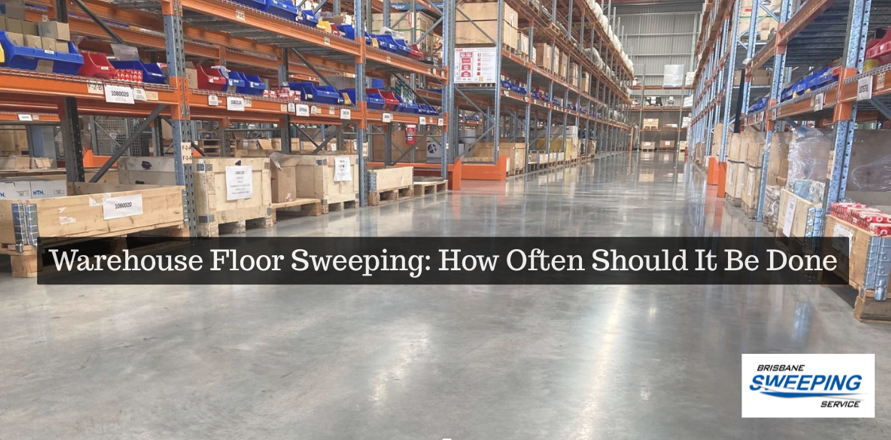
Warehouse Floor Sweeping: How Often Should It Be Done
Most warehouses need daily warehouse floor sweeping, but your exact schedule depends on how busy your site is. If you’re dealing with constant forklift traffic or loads of debris rolling in from operations, you already know the floors get grimy fast.
These dirty warehouse floors also cause slips, wreck equipment, and land you in hot water during safety audits. We’ve cleaned hundreds of industrial facilities and seen what happens when sweeping schedules fall apart.
However, when you nail the right cleaning routine, everything runs much more smoothly. Our team at www.brisbanesweeping.com.au/ handles warehouse sweeping across Brisbane, Gold Coast, and Sunshine Coast, so we know what works.
In this article, we’ll share our best tips for getting warehouse floors properly sorted. Here’s what we’ll cover:
- Frequency of industrial sweeping
- Daily versus weekly cleaning schedules
- Warning signs you’re sweeping too little
- When to call in professional sweeping services
Keep reading to figure out the perfect warehouse cleaning routine for your site.
How Often Should Warehouse Floor Sweeping Happen?
Most warehouses require daily sweeping, since high-traffic industrial floors collect dirt, dust, and debris constantly. Go one day without cleaning, and you’re already looking at buildup that affects safety and equipment.
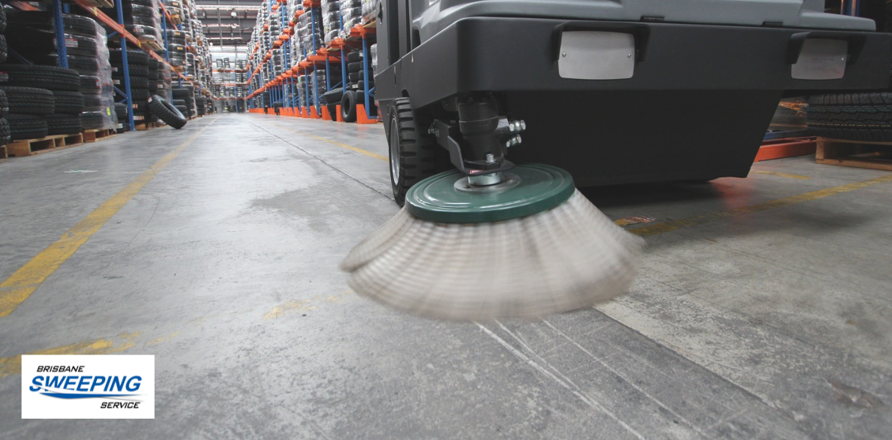
Weekly sweeping, however, only works for smaller facilities with light activity, like those storage warehouses that handle sealed goods with minimal forklift use. But here’s the thing: even low-traffic sites need proper maintenance to avoid long-term grime accumulation.
Your actual sweeping schedule depends on 3 main factors:
- How much traffic moves through your warehouse
- What type of products do you handle
- Your industry’s compliance requirements
These factors decide how fast dust, debris, and hazards can pile up. A busy logistics hub running 24/7 needs way more frequent industrial cleaning than a storage facility that sees action twice a week.
Now that you know the baseline, let’s look at what changes your cleaning frequency.
See also: Selling Your Home Without an Agent: A Guide to a Swift and Efficient Process
What Affects Your Industrial Sweeping Schedule?
Some sites need daily sweeping while others need deeper industrial scrubbing to handle grease and stains. So the right routine depends on what’s happening inside your warehouse.
Here’s what you need to consider while creating a sweeping schedule:
Daily Traffic Levels and Forklift Use
More forklifts and foot traffic mean faster dirt and debris buildup on your industrial floors.
From our work across Brisbane warehouses, high-traffic zones near loading docks require sweeping every single day without fail. It’s because wheel marks and tyre residue gather quickly on busy floors (especially when equipment’s constantly moving materials around the site).
The Type of Goods You Handle
Ever notice how some products just create more chaos than others? If your answer is yes, then you already know raw materials generate way more mess than boxed or sealed products that stay contained. They break down, crumble, and leave traces everywhere workers handle them.
For example, take dry goods. They can be tough to deal with when you’re trying to keep floors clean, because grains, powders, and loose materials create constant dust problems across your warehouse.
You’d be surprised how much packaging materials shed cardboard bits, plastic wrap, and pallet splinters during normal operations.
Dust and Debris from Operations
Your warehouse operations determine how much grime builds up each day.
Construction sites and manufacturing facilities create heavy dust that settles on everything within hours. Then seasonal changes kick in and bring more dirt, leaves, and outside debris through doors and loading areas.
And those gaps around the roller doors let external grime slip into your warehouse constantly (yes, we’ve all pretended not to notice those).
Industry Safety Standards
Meeting compliance requirements keeps you out of trouble with regulators. In fact, slips, trips, and falls make up almost 22% of serious workers’ compensation claims. So keeping your floors clean protects both your workers and your business.
Follow these industry-specific requirements:
- Food Warehouses: These facilities must meet strict daily cleaning for health compliance requirements since health inspectors don’t mess around with floor cleanliness.
- Pharmaceutical Storage: Your pharmaceutical storage should have spotless floors to prevent contamination and audits, and needs specialised cleaning protocols that meet strict hygiene standards.
- General Warehouses: Keep them clean with regular sweeping to avoid Safe Work Australia’s penalties and maintain safe working conditions.
Daily vs Weekly: Finding Your Sweeping Rhythm
So what’s better for your warehouse: daily or weekly sweeps? In this section, we’ll look at when each option makes sense and how it affects your workflow.
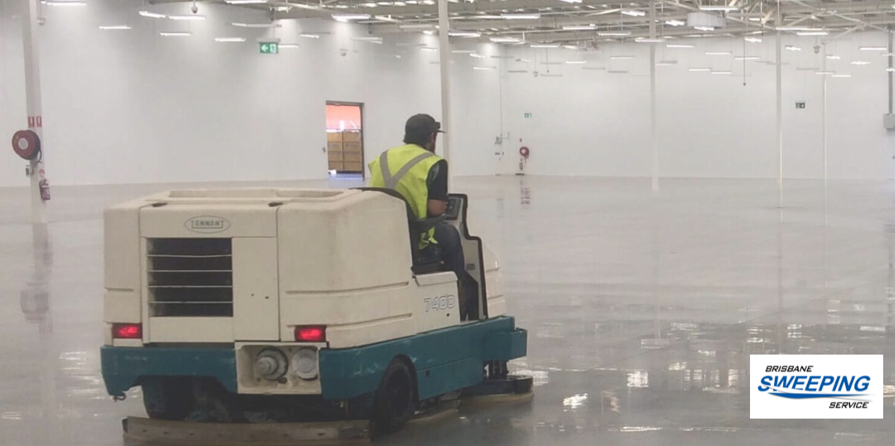
While daily sweeping prevents buildup, it costs more in labour or cleaning service fees. It usually adds up fast when you’re paying for industrial floor sweepers or a dedicated team every single day.
As we already mentioned, weekly cleaning suits smaller warehouses with light traffic and minimal debris. If you’re storing sealed goods in a quiet facility, you can probably get away with less frequent maintenance without risking safety issues.
However, most facilities combine both approaches by hitting high-traffic zones daily while handling low-traffic areas weekly. And honestly, that’s the best move for any warehouse that wants a clean space without overspending. It saves money and keeps operations running safely and smoothly.
Signs You’re Not Sweeping Often Enough
If you spot visible dust buildup on the warehouse surface, it means you’re behind schedule.
Visible dust layers on floors mean debris is building up way too fast for your current cleaning routine. Your staff start complaining about slippery surfaces or tracking dirt into office areas (staff safety complaints are red flags you can’t ignore).
Some other warning signs include:
- Stubborn Tyre Marks: Forklifts leave black tyre marksthat won’t budge with basic cleaning anymore
- Dirty Packaging: Product packaging gets dirty just from sitting on grimy warehouse floors overnight.
When things get really bad, you’re failing safety audits or getting complaints from visiting clients who notice the mess immediately.
Can You Get Away with Less Frequent Cleaning?
Sometimes yes, but you need to know when it’s actually safe.
Low-traffic warehouses storing sealed goods can cut back here and there to twice weekly sweeping without major issues. If your facility sits most days quietly with minimal equipment movement, less frequent maintenance might work fine.
Look, nobody wants to hear this, but cutting frequency risks safety violations, equipment damage, and workplace injury claims that’ll cost way more than regular cleaning.
Through years of warehouse cleaning, we’ve seen skipping cleaning days work temporarily but create more mess that requires expensive deep cleans later.
When to Bring in Professional Sweeping Services
When your team can’t handle daily sweeping during busy periods without pulling workers off other jobs, you should consider bringing in outside help.
Industrial floor sweepers and commercial sweepers cost a lot of money to buy and maintain in-house, plus you need trained operators and storage space for the equipment. They need regular maintenance, and walk-behind sweepers or ride-on sweepers both require storage.
However, professional sweeping services remove those hassles. These services include sweeping, industrial pressure washing, and scrubbing with equipment designed to handle large spaces quickly and thoroughly. They make sense when you need occasional deep cleans beyond standard daily routines
What’s more, they handle dry sweeping to remove dirt, then wet scrubbing for high-traffic lanes, loading areas, car park spaces, and any sections with spills or grease.
That level of experience is why professional cleaning companies like ours bring fully equipped machinery, complete the job properly, and work around your operations without disruption.
Keep Your Warehouse Floors Sorted
Regular sweeping protects staff, equipment, and keeps compliance inspectors happy with your facility.
Start with daily high-traffic sweeping, then adjust frequency based on actual conditions you’re seeing. Also, monitor your floors weekly and watch for dust buildup, stains, or safety complaints that signal you need more frequent cleaning service.
When you can’t manage warehouse floor sweeping in-house, professional cleaning services handle the job properly for thorough cleaning that meets standards. Our team at Brisbane Sweeping can help you develop a scheduled maintenance program that matches your operations across Brisbane, Gold Coast, and Sunshine Coast.